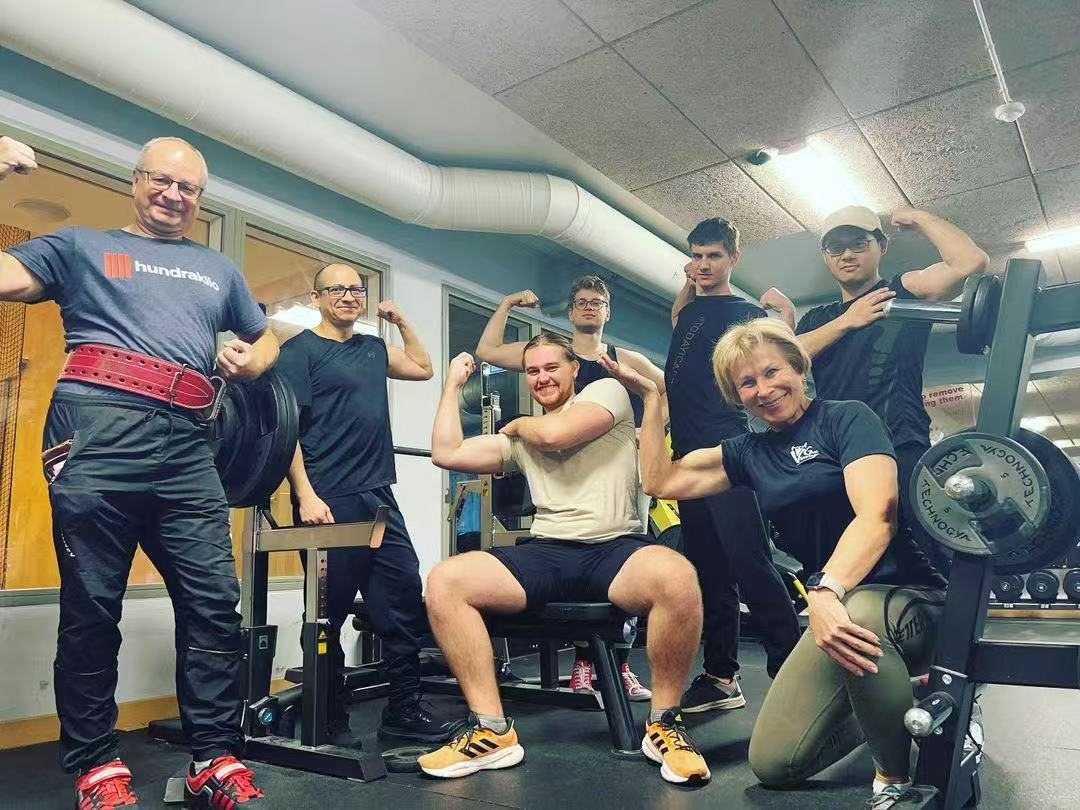
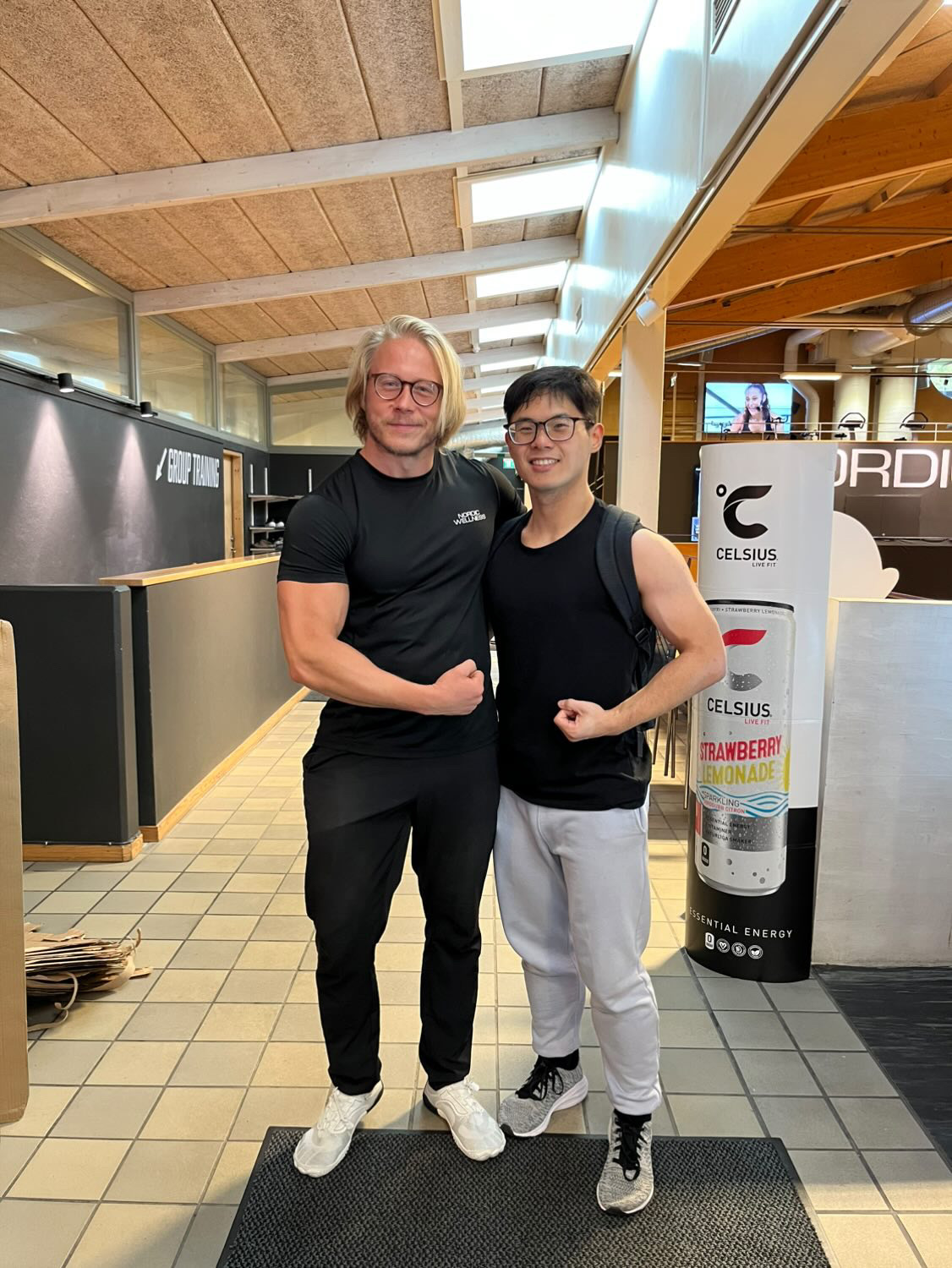
I started training at KTH Hallen. Daniel was my first personal trainer, and I worked with him for two years.
For the first few weeks, he was in no hurry to add weight. We spent most of our time on joint mobility, balance, and warm-ups. I thought of these as preparation for the real training, but Daniel was patient and took me through them one by one. Over those two years, he also helped me establish some basic habits around food and recovery. Breakfast, carbohydrates after training, and sleep gradually became part of how I trained.
I then spent two years training in powerlifting with Viktoria Posmitna, focusing on the squat, bench press, and deadlift. She helped me make a lot of progress in all three lifts and taught me to follow a plan. There were immediate goals and longer blocks of training. A good or bad day, or whether I managed to add weight in a particular session, mattered less than it had before.
Later, Theo helped me refine a number of details in my technique. After years of training, the things that needed changing were often quite small: body position, the order in which I applied force, or a movement I had repeated often enough to stop noticing. The adjustments did not look dramatic, but I could feel the difference.
After KTH Hallen, I moved to a 24-hour Anytime Fitness. These days I mostly train at home. An adjustable set of dumbbells, a bench, a barbell and some plates, plus a yoga mat and a foam roller, cover most of what I need. I no longer need a fully equipped gym for my daily training.

What I pay attention to has changed over the years. At first, I mostly cared about exercises and weight. Gradually, warm-ups, food, sleep, and recovery became part of the same picture. They barely show up in a training log, but they affect what I can do that day and whether I am ready to train again the next.
I also leave some time for cardio. When the volume of strength or hypertrophy work goes up, soreness, fatigue, and some inflammation are difficult to avoid. A moderate amount of easy cardio helps me recover, and it is useful whether I am trying to gain muscle or lose fat. I no longer see it as something separate from strength training. It is simply part of my routine.
I approach learning and research in much the same way. When I start on a new problem, I usually read around it, organise the material, or reproduce an existing method first. None of this produces an immediate result. I can spend a long time on it without adding a line to the paper I am writing. But once the groundwork is there, the work that follows tends to go more smoothly.
This is what "slow is fast" has come to mean for me. I spend a little longer warming up, add less weight when I have not recovered, and read a few more papers before starting a research problem. None of these things appears to move the goal closer. Quite often, though, they save me from having to go back and do the work again.